
Specialist Intervention for Boys’ Behaviour in Schools
Strengthening accountability, emotional regulation and positive peer influence through the R.E.S.P.E.C.T Framework.
MPW Coaching & Consulting CIC delivers structured, causality‑based intervention addressing the underlying drivers of repeated behaviour patterns, peer dynamics and safeguarding concerns in schools.
Programmes include targeted 12‑week behaviour intervention and safeguarding‑aligned pathways addressing harmful behaviour and violence against women and girls (VAWG).
When Behaviour Patterns Persist
Most schools operate robust behaviour and safeguarding systems. Sanctions, restorative processes and pastoral structures remain essential.
However, a small cohort of boys can exert disproportionate influence on:
- Repeated low‑level disruption
- Escalating peer conflict
- Harmful language and boundary testing
- Behaviour data trends and staff workload
- The emotional tone within year groups
When incidents repeat despite consequence, the issue is rarely policy alone. Patterns are often sustained by peer status, reputation dynamics and unexamined identity narratives.
Managing behaviour is necessary. Shifting culture requires development.
When Sanctions Don’t Shift the Pattern
Repeated disruption is rarely random. It is frequently shaped by:
- Social hierarchy within peer groups
- Status‑seeking behaviour
- Emotional regulation gaps
- Emerging masculinity norms influencing conduct
Without structured developmental intervention, these drivers continue to reproduce the same patterns – even within strong behaviour systems.
A Structured Developmental Response
The R.E.S.P.E.C.T Framework provides a staged developmental pathway enabling boys to move from behavioural awareness to accountable peer influence and positive leadership within school communities.
Surface behaviour is often a symptom.
Repeated disruption, reactive responses and escalating peer dynamics are commonly influenced by:
- Emotional regulation capacity
- Identity formation during adolescence
- Peer hierarchy and status dynamics
- Decision‑making under social pressure
- Developing standards of masculinity
The R.E.S.P.E.C.T Framework strengthens the internal competencies that influence behaviour in real time.
Rather than focusing solely on compliance, the model develops:
- Awareness of behavioural triggers
- Personal agency and choice
- Emotional regulation strategies
- Accountability and ownership
- Positive leadership identity
Sustainable change occurs when behaviour shifts from reaction to reflection.
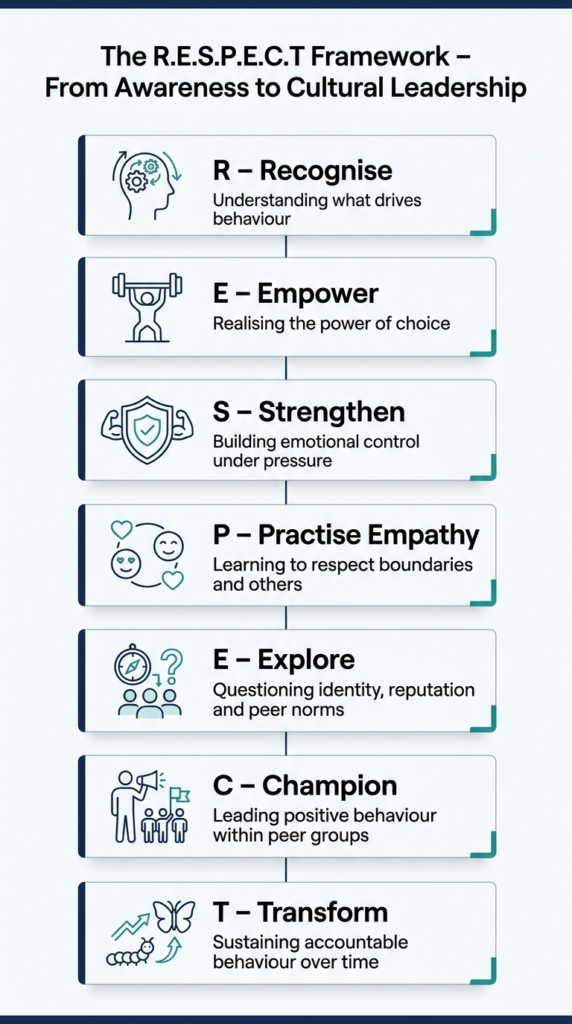
Two Structured Intervention Pathways
All delivery is grounded in the R.E.S.P.E.C.T Framework and tailored to school priorities.
Behaviour & Accountability
Targeted 12‑week intervention for boys with repeated behavioural incidents, reactive responses or risk of exclusion.
Delivered through blended small‑group sessions and 1:1 coaching.
- Designed to reduce repeat incidents and strengthen classroom stability.s on:
- Repeated low‑level disruption
- Boundary testing
- Emotional impulsivity
- Developing responsibility
Respect & Safeguarding
Structured programme addressing harmful behaviour, peer‑on‑peer sexual harassment and violence against women and girls (VAWG) in schools.
Aligned with KCSIE safeguarding expectations.
- Boundary awareness and consent understanding
- Empathy and respectful interaction
- Responsible masculinity
- Safe bystander leadership
- Accountability within peer culture
- Preventative. Structured. Developmental.
How It Works in Practice
TThe R.E.S.P.E.C.T Framework is delivered through a clearly defined, 12‑week intervention model integrated within existing behaviour and safeguarding systems.
Each cohort follows a structured developmental cycle combining:
- Small‑group progression
- Personalised 1:1 coaching
- Defined review checkpoints
- Behaviour data comparison
- Accountability consolidation
The model is designed to embed within school processes rather than operate as a standalone workshop – ensuring developmental work translates into measurable behavioural outcomes.
Measurable Behavioural Impact
Progress is monitored through behaviour data comparison, structured review checkpoints and staff feedback, ensuring developmental change is observable and evidenced over time.
Sustained intervention produces measurable improvements in behaviour, accountability and peer dynamics.
Impact is typically reflected in:
- Reduction in repeated low‑level behaviour incidents
- Decreased escalation of peer conflict
- Increased pupil ownership of actions
- Improved emotional regulation during challenge
- Clearer understanding of behavioural and safeguarding boundaries
Why Our Approach Is Different
Many behaviour interventions respond to incidents after they occur.
While sanctions and restorative conversations are necessary, they do not always address the developmental drivers that cause patterns to repeat.
The R.E.S.P.E.C.T Framework provides a structured, causality‑based model that strengthens the internal competencies shaping behaviour – including emotional regulation, peer hierarchy awareness, identity development and decision‑making under pressure.
The aim is behavioural maturity and sustained accountability, not short‑term compliance
Ready to Strengthen Behavioural Culture?
If your school is seeking targeted boys’ behaviour intervention or safeguarding‑aligned support, we welcome an initial consultation.